FDM vs Resin 3D Printer: Which Should You Buy?

Design and making background since school. Bambu Lab owner — regularly printing projects with my kids and practical fabrications around the house. 3D printing sits right where design thinking meets problem solving.
Just so you know, some links on this page are affiliate links. If you buy something via them, we get a small kickback. You don't pay more, but it helps toward filament and test prints.
FDM and resin 3D printers are both remarkable, but for completely different reasons. One turns your models into functional objects, brackets, enclosures, tools, replacement parts. The other produces surface detail that makes prints look injection-molded. Get clear on which matters to you, and the decision makes itself.
Quick Picks
How FDM Works
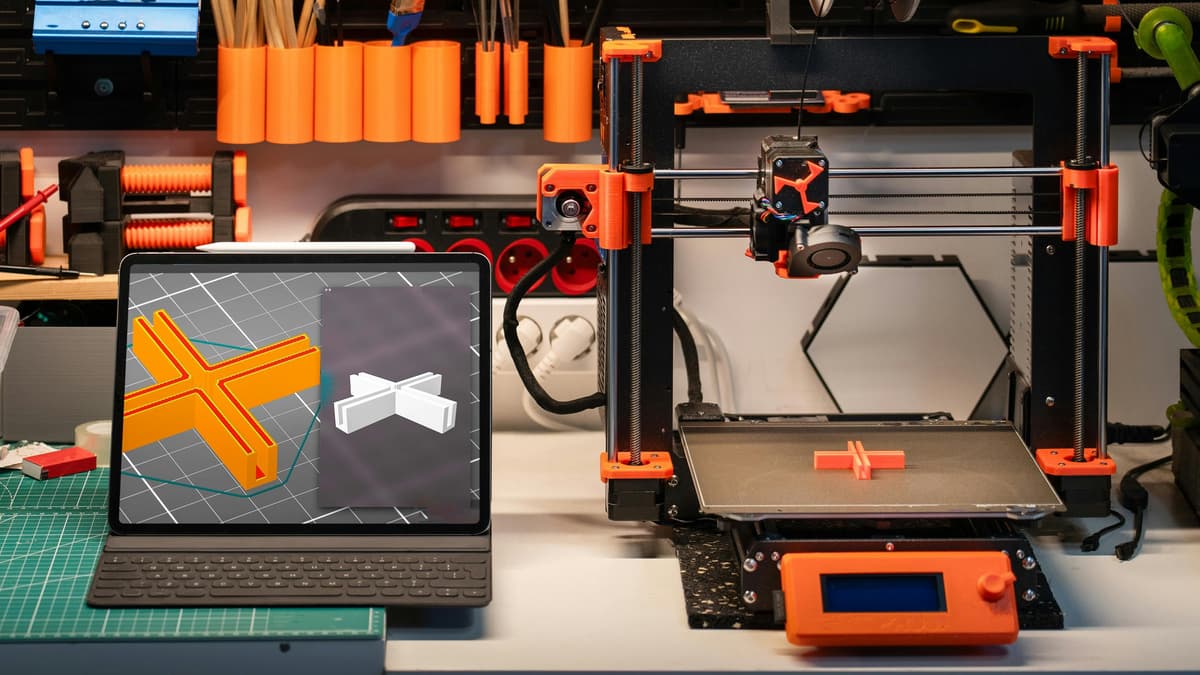
Fused Deposition Modeling melts plastic filament and deposits it layer by layer. A heated nozzle traces each layer's shape, building up the object from the bed upward. Think of it as a very precise hot glue gun moving in three dimensions, building geometry one pass at a time.
The result is strong, practical, and printable in dozens of materials, PLA for general purpose, PETG for parts that need to survive real use, TPU for flexible components. FDM is why makers can print replacement parts for broken appliances, custom enclosures for electronics, and functional objects they designed themselves.
How Resin Works
MSLA resin printers use UV light to cure liquid photopolymer resin. An LCD screen masks the UV source, exposing an entire layer at once. The build plate rises incrementally, each layer curing beneath it. This process produces dramatically finer detail because layer heights are measured in microns rather than tenths of a millimeter.
Detail: Resin Wins
Typical FDM layer heights run 0.1–0.2mm. Resin runs 0.01–0.05mm, often four to ten times finer. For miniatures, jewelry, dental models, or any print where surface quality matters as much as shape, this difference is visible and significant. FDM layer lines are part of the aesthetic. Resin prints look like they came off a production line.
Strength: FDM Wins
Resin prints are brittle. They chip under impact and degrade in sunlight without post-processing. Filament materials like PETG and ABS flex under stress rather than snapping. For anything mechanical, brackets, hinges, clips, enclosures, FDM is the right choice. There's no competition.
Build Volume: FDM Wins
Budget FDM printers offer 220×220×250mm build volumes as standard. Most resin printers top out around 153×87×165mm. Printing large functional parts on resin is impractical, you'd need to split the model into sections and glue them together, adding complexity and visible seams. For objects where size matters, FDM wins by default.
Cost and Running Costs
Entry prices are similar. A capable beginner FDM printer starts around $199. A capable resin printer starts around $159. The running costs diverge from there.
| Item | FDM | Resin |
|---|---|---|
| Material cost | $15–25/kg PLA | $25–50/liter resin |
| Post-processing | None | IPA wash + UV cure |
| PPE | Not required | Nitrile gloves every session |
| Consumables | Nozzle ($1–3) every ~100 prints | FEP film ($8–15) every few hundred prints |
| Equipment | Printer only | Printer + wash station + cure station |
| Monthly estimate (casual) | $15–25 | $25–45 |
Resin has meaningfully higher ongoing costs. Budget accordingly before buying a resin printer.
Mess and Safety
FDM is clean. PLA is non-toxic. Failed prints are dry waste. The printer runs, the model grows, you pull it off the bed when done.
Resin requires discipline from day one. Liquid resin is a skin irritant and potential allergen. You need nitrile gloves, proper ventilation, and a wash-and-cure station for post-processing. Uncured resin needs correct disposal, not down the drain. Consistent resin use without proper precautions causes sensitization over time. Read our resin safety guide before committing to a resin printer.
Ease of Use: FDM Wins
FDM: load filament, slice model, print. Failed prints mean wasted plastic, not chemical cleanup.
Resin: every session involves gloving up, ventilating the space, washing finished prints in IPA, UV curing, and careful waste disposal. The detail output is worth it for the right projects, but it's a workflow, not just a printer.
Beginner-Friendliness: Start with FDM
Start with FDM. Learn to model, learn to slice, learn how layer adhesion works and what causes failed prints, without adding chemical safety protocols on top of everything else. The Creality Ender 3 V3 SE has auto-leveling that removes the most common beginner frustration, a direct drive extruder that handles PLA, PETG, and TPU, and one of the largest support communities in 3D printing. Every problem you'll encounter has been solved and documented on r/3Dprinting or YouTube.
Once you understand how 3D printing works, adding a resin printer for detail work is a natural progression.
When to Choose Resin
If you're printing miniatures, tabletop gaming figures, jewelry, or detailed display pieces, the surface quality difference is not marginal. Resin prints at this scale look like professional production parts. FDM at the same scale requires significant sanding and priming to approach the same result.
The Anycubic Photon Mono 4 is the entry point most resin beginners land on, capable output, fast cure times, and small enough to fit on a desk. The Elegoo Mars 4 Ultra adds WiFi, auto-leveling, and faster print speeds if you're running projects at volume.
What You Can Actually Make
With FDM: Functional parts are where FDM excels. Replacement components for household appliances, custom electronics enclosures, cable management clips, wall brackets, tool holders, garden labels, custom jigs and fixtures. Hobbyist projects: dice towers, board game organizers, camera mounts, phone stands. Large-format items where resin's small build volume would require splitting into many sections. Cosplay armor and props where surface detail matters less than structural integrity and scale. Anything where you need parts that flex (TPU) or survive heat (PETG, ASA) or impact (PETG, ABS).
At 0.15–0.2mm layer height, FDM prints look good from normal viewing distance and are genuinely functional. Layer lines are part of the aesthetic at this scale, most people stop noticing them within a week.
**With Resin:** Detail-critical work at small to medium scales. 28mm tabletop miniatures with visible facial features, fabric texture, and equipment detail that looks factory-made. Jewelry masters for lost-wax casting, resin holds a surface finish close enough to injection molding for professional jewelers to use it for production. Busts and portrait pieces where surface smoothness matters. Small functional components requiring tight tolerances.
At 0.025–0.05mm layer height, a well-tuned resin print needs no sanding for smooth surfaces.
Software and Slicing
Both FDM and resin use slicing software to convert 3D model files (.STL or .3MF) into instructions the printer reads. The workflow is similar, import model, configure settings, export, but the software is different.
For FDM: Ultimaker Cura is the standard starting point. Free, handles the Ender 3 series natively, preset profiles for most popular printers. Settings to learn first: layer height (0.2mm to start), print speed (start slower, increase once you understand your printer), and support structures.
**For Resin:** Chitubox (free version available) and Lychee Slicer (freemium) are the standard tools. The critical additional step: resin prints build upside-down from the build plate. Most prints require supports to prevent layers from detaching. Support placement is the skill that separates reliable results from consistent failures.
Model files: Thingiverse, Printables, and Cults3D host thousands of free models for both FDM and resin.
First Month: What to Expect
FDM first month: Expect 2–3 failed prints while you learn bed leveling, first layer adhesion, and how models behave. The Ender 3 V3 SE's automatic leveling removes the most common early frustration. PLA on a PEI surface, bed at 55–60°C, nozzle at 210°C is a reliable starting configuration. Start with simple objects and build complexity once you understand the fundamentals.
**Resin first month:** Expect a steeper initial curve and some messy moments. Resin requires PPE from session one, nitrile gloves and ventilation are not optional. Failed prints often stick to the FEP film rather than lifting with the build plate. Exposure settings need calibration for each resin and printer combination. Print a calibration matrix before tackling anything you care about. Once dialed in, resin is remarkably consistent.
Common Questions
Can you print miniatures on an FDM printer? Yes, but the results are noticeably inferior at small scales. Layer lines are visible. You can sand and prime to improve the surface, but dedicated resin miniature printing produces detail that FDM cannot match without significant post-processing.
Can I have both? Most serious makers end up with both. A budget FDM printer around $199 plus a budget resin printer around $159 covers almost every use case for under $360 total. Start with FDM to learn the fundamentals, add resin when you want its specific capabilities.
Which is faster? FDM for large objects. Resin for small detailed objects. A resin printer cures an entire layer at once regardless of how much is on the build plate, so printing 20 miniatures takes roughly the same time as printing one. FDM build time scales with volume and complexity.
**What filament should I start with?** PLA in any color you like. It prints at 190–220°C nozzle temperature, adheres reliably to heated beds, doesn't require an enclosure, and doesn't produce fumes that need serious ventilation. Avoid PETG, ABS, or engineering filaments until you have consistent PLA results.
Do I need to design my own models? Not at all. Thingiverse, Printables, and Cults3D host hundreds of thousands of free downloadable designs. Most beginners start exclusively with downloaded models. Learning 3D modeling (Fusion 360, Blender, TinkerCAD) opens up the real potential of the hobby, but it's not required to start making useful, satisfying things from day one.
Hybrid Workflow: Using Both Together
Most makers who stick with the hobby beyond the first year end up owning both technologies. The combination covers nearly every use case you will encounter.
The practical setup: An FDM printer handles structural components, large parts, rapid prototyping, and everyday functional prints. A resin printer handles detail-critical work at small scales, miniatures, jewelry masters, display pieces, and precision components where surface finish matters.
Example workflow: Designing a custom board game. FDM prints the box, tile holders, and large terrain pieces. Resin prints the character miniatures, tokens, and any piece where fine detail affects the visual quality. Total material cost for a complete game prototype runs 30 to 50 dollars, and the mixed output looks professional.
Workspace considerations: An FDM printer needs a stable surface and a power outlet. A resin printer needs the same plus ventilation, PPE storage, and a wash-and-cure station. Plan for 120 by 60 centimeters of dedicated desk space if running both side by side. Keep resin supplies isolated from FDM, uncured resin on filament spools or FDM bed surfaces causes adhesion problems.
Materials Deep Dive
Understanding material options helps you decide which technology fits your projects before you spend money.
FDM materials you will actually use: - PLA: The default. Prints at 190 to 220 degrees Celsius, minimal warping, virtually no smell. Brittle under impact and softens above 60 degrees Celsius. Perfect for learning, prototyping, and display pieces. About 15 to 25 dollars per kilogram. - PETG: The functional upgrade. Stronger than PLA, better heat resistance, more flexible. Prints at 230 to 250 degrees Celsius. Slightly stringier, requiring retraction tuning. About 18 to 28 dollars per kilogram. Use for any part that needs to survive real-world stress. - TPU: Flexible filament for phone cases, gaskets, bumpers, and wearable parts. Requires a direct drive extruder for reliable printing. About 25 to 35 dollars per kilogram. - ABS and ASA: High heat resistance, excellent for outdoor use (ASA resists UV). Both require an enclosure and ventilation due to fumes. Skip unless you specifically need their properties.
**Resin types you will encounter:** - Standard resin: The default for detail work. Brittle, not for functional parts. About 20 to 35 dollars per liter. - **ABS-like resin:** More impact-resistant than standard. Better for parts that get handled. About 25 to 40 dollars per liter. - Water-washable resin: Simplifies cleanup by replacing IPA with water. Good for beginners. About 25 to 40 dollars per liter. - Engineering resins: High-strength, flexible, or high-temperature variants. Expensive (50 to 100 dollars per liter) and require precise settings. Not a starting point.
Total Cost of Ownership: Year One
Before committing, understand what each technology actually costs over the first twelve months of regular use.
| Cost Category | FDM (casual) | FDM (regular) | Resin (casual) | Resin (regular) |
|---|---|---|---|---|
| Printer | $199 | $399 | $159 | $219 |
| Materials (year) | $60 | $180 | $80 | $240 |
| Consumables | $15 | $40 | $60 | $120 |
| Equipment | $0 | $50 | $80 | $120 |
| Total year one | $274 | $669 | $379 | $699 |
FDM is cheaper to run, especially for casual users. Resin consumables (IPA, gloves, FEP film) add up faster than filament nozzles. Budget accordingly.
Noise and Placement
FDM noise: Stepper motors produce a constant hum during printing. Modern printers with TMC2209 drivers (standard on most 2024 and later models) are quiet enough for the same room, roughly 45 to 50 decibels, comparable to a refrigerator. Older printers with A4988 drivers are noticeably louder. Enclosures reduce noise further.
**Resin noise:** Significantly quieter during printing. The loudest moment is the build plate lifting between layers, a brief mechanical sound every few seconds. The wash-and-cure station adds noise during post-processing but only runs for minutes at a time.
Placement: FDM printers can go anywhere stable and level. Resin printers need ventilation, a room with an opening window at minimum, ideally near an exhaust fan. Do not place a resin printer in a bedroom or enclosed space without dedicated air extraction.
Upgrading and Growing
FDM upgrade path: Start with a budget printer, learn the fundamentals, then upgrade to a mid-range machine with enclosed frame, higher speeds, and multi-material capability when you hit the limits of the starter machine. Your slicer profiles and modeling skills transfer directly.
**Resin upgrade path:** Start with a budget MSLA printer, learn the workflow, then upgrade to a larger-format or faster machine when batch volume justifies the cost. Your slicing skills and resin knowledge transfer directly. The main upgrade drivers are build volume (for larger prints) and speed (for higher throughput).
When to add the second technology: When you find yourself wanting to make something your current printer physically cannot produce. FDM users hit this when they need miniature-quality detail. Resin users hit this when they need large functional parts. Most makers reach this point within 6 to 12 months.
What to Avoid
Buying a resin printer as your first printer. The detail is genuinely impressive, but the chemical safety requirements, post-processing workflow, and learning curve make a poor introduction to 3D printing. Start with FDM, understand how printing works, then add resin when you know exactly what you want from it.
Cheap no-brand resin. Unknown resins have inconsistent cure times and unpredictable brittleness between batches. Anycubic Basic and Elegoo Standard are the reliable entry-level options with documented settings across most resin printers.
Skipping PPE with resin printing. Uncured photopolymer resin is a skin sensitizer. Nitrile gloves are not optional. Ventilation is not optional. Read the safety requirements before ordering resin, not after.
Trying to tune your FDM printer to match resin detail. FDM resolution is limited by nozzle diameter and layer height. No amount of calibration changes what the physics allows. If miniature-quality detail is the goal, buy a resin printer.
What I'd Buy Today
**For a first printer:** The Creality Ender 3 V3 SE. *(Price when reviewed: ~$199 | Check Price on Amazon)* Auto-leveling removes the biggest beginner frustration, direct drive handles PLA, PETG, and TPU without modification, and the community support is unmatched. Start here, print for three months, and you'll know whether you want resin alongside it.
For miniatures and detail work: The Anycubic Photon Mono 4. *(Price when reviewed: ~$159 | Check Price on Amazon)* The standard entry point for resin printing. Fast cure times, reliable output, small enough for a desk setup. Set up proper ventilation before your first session.
The right printer is whichever matches what you actually want to make. Start with FDM, make things you are proud of, and add resin when you want the detail only it delivers.
What You'll Need With It

Premium PLA with industry-leading ±0.02mm precision guaranteed. Every spool measured and verified. Predictable, reliable behavior ideal for critical prints. Worth the premium when quality matters.
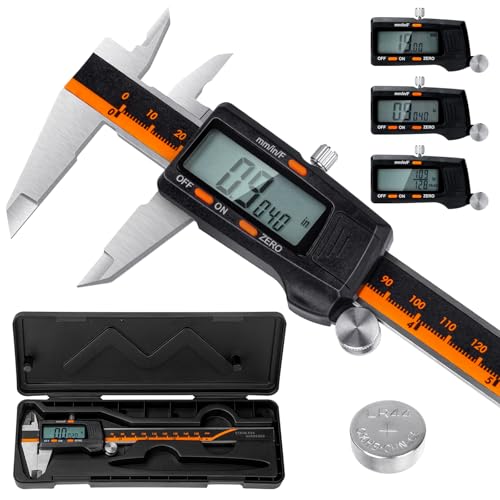
Laboratory-grade accuracy (0.01mm resolution, ±0.02mm accuracy) for measuring filament diameter, print dimensions, and calibration. Hardened stainless steel construction. Essential for proper calibration and quality control.
As an Amazon Associate, we earn from qualifying purchases.