Direct Drive vs Bowden Extruder: Which is Better?

Design and making background since school. Bambu Lab owner — regularly printing projects with my kids and practical fabrications around the house. 3D printing sits right where design thinking meets problem solving.
Just so you know, some links on this page are affiliate links. If you buy something via them, we get a small kickback. You don't pay more, but it helps toward filament and test prints.
Direct drive or Bowden? The question comes up constantly on r/3Dprinting, and the honest answer is simpler than most discussions make it: if you want to print flexible filaments like TPU, you need direct drive. If you don't, either system will handle everything you throw at it.
Quick Picks
Not sure which type suits your projects? Take our free quiz, it matches you to a printer based on what you actually want to make. (Takes 2 minutes.)
How Bowden Works
In a Bowden setup, the extruder, the motor that grips and pushes filament, sits fixed on the printer frame. A PTFE tube runs from the extruder to the hotend on the print head.
Because the extruder is not moving with the print head, the print head assembly is lighter. That matters for speed: less mass means less inertia, which means the head can accelerate and decelerate faster without vibration causing ringing artifacts in the print. This is why high-speed printers like the Creality K1 and Bambu Lab P1P series use direct drive on CoreXY motion systems, where the lightweight moving carriage makes direct drive viable at high speed. The Bowden/direct drive trade-off primarily applies to cartesian machines.
The honest downside: that PTFE tube creates compliance. When the extruder pushes filament, there is a momentary lag before the filament exits the nozzle because the flexible material compresses slightly in the tube. For rigid filaments, PLA, PETG, ASA, ABS, this is manageable with tuned retraction settings. For flexible filaments like TPU, the compliance is severe enough that the material buckles inside the tube instead of feeding through cleanly.
Bowden retractions also need to be longer (3-7mm versus 0.5-2mm on direct drive) and slower to prevent the filament from pulling back too fast and leaving gaps or stringing. Getting this dialled in takes calibration time.
How Direct Drive Works
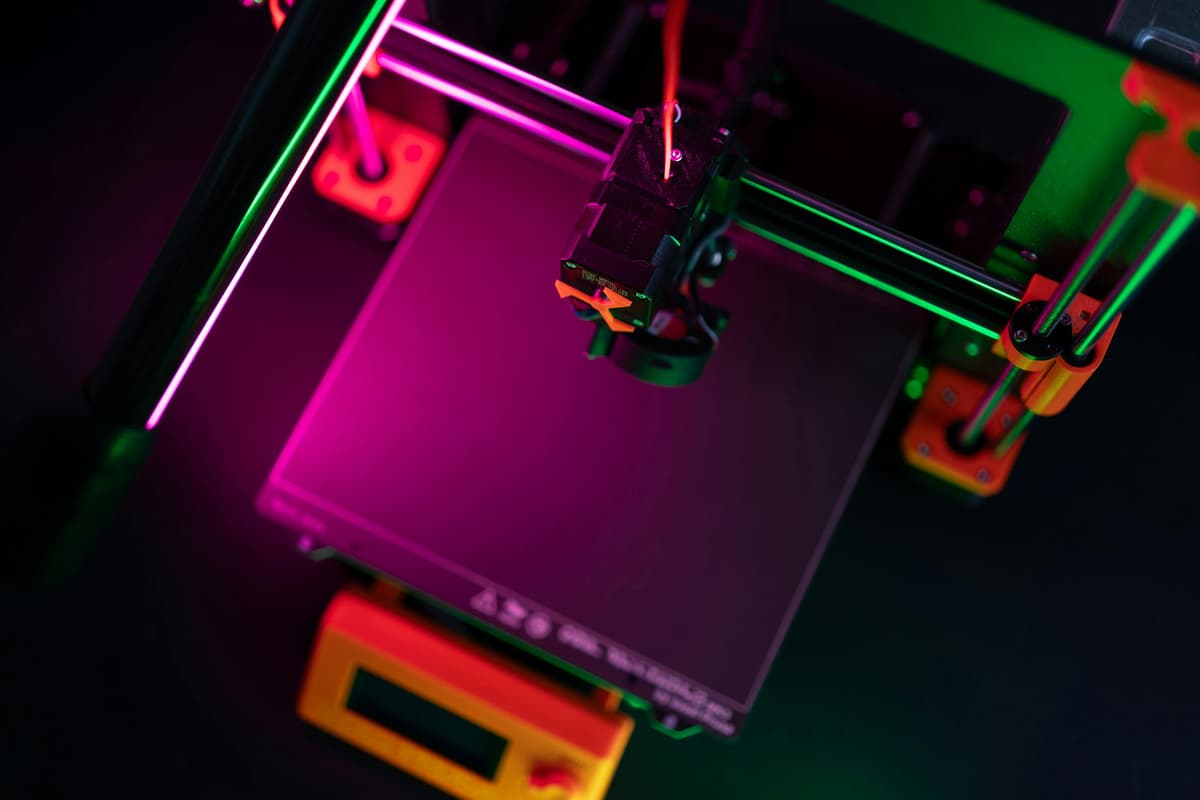
Direct drive mounts the extruder directly on the print head. The filament path from extruder to nozzle is a few centimetres at most.
That short, precise path means the extruder has near-instant control over filament movement. Retractions can be fast and short. Flexible materials, TPU, TPE, and flexible composites, feed cleanly because there is no long tube for them to compress and bind in.
Direct drive also handles exotic filaments more reliably. Woodfill, metal-fill composites, and carbon fibre reinforced materials all benefit from the more controlled feed, especially at slower speeds.
The honest downside: the print head is heavier. On cartesian printers (where the head moves in X and Y), extra mass means more inertia. Push the speed too high and you get ringing, those ripple patterns in the print surface near sharp corners. On older Ender 3 style machines running Marlin firmware, a direct drive conversion will either reduce your comfortable print speed or require input shaping (Klipper firmware) to compensate. Modern printers with direct drive have this engineered into the hardware from the start.
Material Compatibility: What Actually Matters
This is where the choice becomes clear.
Bowden handles without issue: PLA, PETG, ABS, ASA, most carbon-fibre composites at standard settings, and rigid filaments generally.
Direct drive required for: TPU (thermoplastic polyurethane) and other flexible filaments, very soft composites, some high-flow specialty materials.
If you know you want to print phone cases, gaskets, hinges, wearable parts, or anything that needs to flex, buy a direct drive printer. If your projects are structural parts, decorative prints, miniatures, or functional components that don't need to bend, Bowden does the job.
The grey area is abrasive filaments, those with metal fill, carbon fibre, or glow-in-the-dark particles. These wear nozzles fast regardless of extruder type, but direct drive handles them with fewer feed issues. You'll need a hardened nozzle either way; see our upgrade guide for what's actually worth fitting.
Speed: The Modern Picture
The speed argument is where this debate has changed most in recent years.
On older cartesian printers with stock firmware, Bowden was meaningfully faster because of the lighter print head. That trade-off still exists on budget machines, but high-speed printing has flipped the assumption.
Modern printers, both Bowden and direct drive, use input shaping to compensate for resonance. The Creality K1 runs 600mm/s with direct drive. The Bambu Lab P2S runs 600mm/s with direct drive. The extruder system is no longer the limiting factor on speed.
For a standard home printer running at 60-150mm/s, the speed difference between a well-tuned Bowden and a well-tuned direct drive machine is negligible. Don't let speed arguments be the deciding factor unless you're buying specifically for throughput.
Bowden Retraction Calibration
If you have a Bowden printer and want to get the most out of it, retraction settings are where the time goes.
Starting point: 5mm retraction distance at 45mm/s. From there, run the standard retraction calibration tower, print a tall, thin object with varying retraction settings across the height and identify where stringing stops without causing gaps or grinding.
Common failure modes: - Stringing that won't stop: usually a temperature issue, not retraction. Drop your print temperature by 5°C before increasing retraction distance. - Gaps or under-extrusion after retractions: retraction distance too long, or retraction speed too fast. Reduce distance before speed. - Grinding sounds: the extruder is chewing the filament at the retraction point. Reduce both distance and speed; check the filament path for any resistance.
The practical ceiling for Bowden retraction is around 7mm for standard PTFE setups. Beyond that, you are more likely to pull molten filament into the cold zone and cause a jam than to eliminate stringing. If you are at 7mm and still seeing strings, the problem is elsewhere.
Direct Drive Tuning
Direct drive makes retraction calibration much simpler. Starting point: 0.8-1.5mm at 35mm/s. Most direct drive printers need very little retraction because the short filament path gives the extruder precise control.
Where direct drive users go wrong: carrying over Bowden retraction values. A 5mm retraction on a direct drive system will pull the filament back into the cold zone almost every time, causing jams. If you've switched from a Bowden printer, reset your retraction to 1mm and calibrate up from there.
For flexible filaments: reduce retraction to near-zero (0.5mm or less). TPU's elasticity means it springs back after retraction anyway, high retraction values cause the material to bunch up inside the extruder.
Conversion: Switching Systems After Purchase
Most popular Bowden printers have direct drive conversion kits available:
Ender 3 series: Creality Sprite Extruder, MicroSwiss NG, Bondtech DDX, prices range from £40 to £120 depending on kit quality. Installation takes 1-2 hours and is reversible. Note: adding direct drive to an Ender 3 V2 without Klipper will slow your safe print speed by around 20%. Worth it for TPU; arguable for everything else.
CR-10 series: Similar options as the Ender 3. Same speed trade-off applies.
Prusa MK4S: Already direct drive from the factory.
Bambu Lab printers: All use proprietary direct drive systems. Not user-converted.
After conversion, reset your retraction settings before printing, the values that worked on Bowden will cause jams on direct drive. Not sure if conversion is worth it for your printer? Run the numbers against buying a new printer designed with direct drive from the start. The [best 3D printer under £500](/guides/best-3d-printer-under-500-uk) guide covers models at every budget.
Printing TPU: What Direct Drive Actually Gets You
TPU (thermoplastic polyurethane) is the material that makes flexible 3D printing genuinely useful. Phone cases, cable tidies, gaskets, overshoes for robots, wearable components, all of these need to flex without breaking. You can produce them reliably on direct drive. On Bowden, it ranges from difficult to impossible depending on shore hardness.
TPU comes in different hardnesses, measured on the Shore scale. Shore 95A is the most common, firm enough to hold shape, flexible enough to bend. Shore 85A and below gets progressively softer and more elastic. 95A is printable on many Bowden setups with patience. Anything 85A or softer needs direct drive, full stop.
The practical difference: on a well-tuned direct drive printer, TPU prints at 35-45mm/s without drama. It comes off the bed cleanly, layers adhere well, and the finished part has that satisfying flexible quality. On Bowden, at the reduced speeds required (15-25mm/s), you'll spend more time troubleshooting than printing, and the failure mode is usually a jam 20 minutes into a two-hour print.
If your project list includes anything requiring flexibility, cross "Bowden-only printer" off the list before you start shopping.
What to Avoid
Cheap unbranded Bowden tubes: The PTFE tube quality matters. Low-quality tubes have inconsistent inner diameters that cause feed problems, especially at temperature. Capricorn PTFE tubing is the standard recommendation, branded, consistent, and available for around £8. The unbranded tubes that come with cheap kits often work fine for months and then cause mysterious jams.
Direct drive conversion kits from unknown brands: There are dozens of conversion kits for the Ender 3. The bad ones have flex in the mount that introduces the wobble you were trying to eliminate. Stick to Creality Sprite, MicroSwiss, or Bondtech, all three have verified community track records.
Running flexible filaments through a Bowden printer without modification: Some people claim you can print TPU through a Bowden setup with slow speeds. You can, sometimes. But it requires 15-25mm/s print speed (versus 40-60mm/s on direct drive), careful temperature control, and significant patience. If TPU is a meaningful part of your printing plans, the work-around is not worth it. Get direct drive.
Over-retraction on Bowden setups: New Bowden users often chase stringing with ever-longer retractions. Beyond about 7mm, retraction more often causes grinding and jams than it cures stringing. The real fix is temperature and cooling calibration, not retraction distance.
Making the Decision
Here is the simplest version: buy based on what you're going to print in the first three months.
Mostly PLA and PETG for functional parts and decorative prints? Either system works. Buy whichever printer fits your budget and has the features you want, extruder type doesn't need to be the deciding factor.
Planning to print TPU, flexible phone cases, or wearable parts? Buy direct drive from the start. The Ender 3 V3 SE (around £170) is the obvious entry point; it ships with a Sprite direct drive extruder and auto bed levelling.
Want maximum capability without compromise? The Bambu Lab P2S (around £479) runs direct drive at 600mm/s in a fully enclosed chamber, it prints everything from flexible TPU to engineering-grade ABS without configuration headaches.
The extruder debate has a clear answer for anyone printing flexible materials. For everyone else, pick the printer that suits your budget and build volume, and learn what your extruder can do. By your fifth spool, you'll have more opinions about retraction calibration than you ever expected. The extruder will feel like the least interesting variable.
One last thing worth saying: the community on r/3Dprinting has spent years arguing about this. Most of the arguments there are from people who bought one type and want to justify the choice. The truth is that both systems work well for the 90% of materials most hobbyists ever use. Make your decision based on your project list, not on which forum camp shouts louder.
Take our quiz if you want a personalised recommendation based on your specific projects and budget. Or compare Ender 3 variants head to head in our Ender 3 comparison, it covers which models have direct drive as standard and which need conversion. Already own a printer and considering an upgrade? Our upgrade guide runs through direct drive conversion kits and every other mod worth considering.
Common Questions
Can I print TPU on a Bowden printer at all? Shore 95A TPU is sometimes printable on Bowden setups at very slow speeds (15–25mm/s) with careful temperature control. Success is inconsistent and depends heavily on the specific printer and tube quality. Anything softer than 95A is effectively impossible on Bowden. If TPU is a meaningful part of your plans rather than an occasional experiment, buy direct drive from the start.
Does direct drive cause more ringing? On budget cartesian printers without input shaping, yes, the heavier print head produces visible ringing at speeds above 80–100mm/s. On modern printers with input shaping (Klipper firmware, or factory-tuned on machines like the Ender 3 V3 SE), the difference is negligible. If speed matters, check whether your target printer has input shaping before worrying about extruder type.
Is Bowden more reliable long-term? Both systems are equally reliable when properly maintained. Bowden requires periodic PTFE tube replacement, the tube degrades with heat cycling at the hotend connection. Direct drive requires occasional extruder gear tension adjustment. Neither fails more often than the other in normal use.
Should I convert my Bowden printer to direct drive? Only if you specifically need TPU and your printer otherwise works well. Conversion kits cost £35–100, take 1–2 hours to fit, and typically reduce your safe print speed by 15–20% on cartesian machines. If your printer is otherwise due for replacement, buying a direct drive machine is usually cleaner than converting.
Print Quality Differences
The extruder system affects quality in specific, measurable ways.
Surface finish: At speeds below 80mm/s, both systems produce identical surface quality when properly tuned. Above 80mm/s on cartesian machines, Bowden produces slightly smoother results because the lighter print head generates less vibration. On CoreXY machines (Bambu Lab, Voron), this difference disappears.
Retraction marks: Bowden setups are more prone to small blobs at travel moves, the compliance in the PTFE tube makes precise start-stop control harder. Direct drive produces cleaner transitions because the short filament path responds immediately.
Bridging: Direct drive handles unsupported spans more reliably. The extruder can precisely control flow as the head crosses open gaps. Bowden systems sometimes over-extrude at the start of bridges as stored pressure in the tube releases.
Stringing: With proper calibration, both systems can achieve clean results on standard filaments. Bowden needs longer, slower retractions (4–7mm at 45mm/s). Direct drive uses short, fast retractions (0.8–1.5mm at 35mm/s). The different numbers catch people out when they switch systems.
Maintenance Schedule
Bowden: Check and replace the PTFE tube every 6–12 months depending on print temperatures. Higher-temperature filaments (ABS, ASA above 240°C) degrade the tube faster. Inspect the push-fit couplers at both ends, worn couplers allow tube movement that causes inconsistent extrusion. Replace extruder spring tension as needed.
Direct drive: Clean the extruder gear teeth every 2–3 months, filament dust accumulates between the teeth and reduces grip. Check tension quarterly. The short heat break between extruder and hotend can develop micro-clogs with certain filled filaments (wood-fill, metal-fill); run a cold pull periodically to clear any residue.
Both systems cost roughly £15–25 per year in consumables for a single printer in regular use.
As an Amazon Associate, we earn from qualifying purchases.