3D Printer Setup Guide: First Steps for Beginners

Design and making background since school. Bambu Lab owner — regularly printing projects with my kids and practical fabrications around the house. 3D printing sits right where design thinking meets problem solving.
Just so you know, some links on this page are affiliate links. If you buy something via them, we get a small kickback. You don't pay more, but it helps toward filament and test prints.
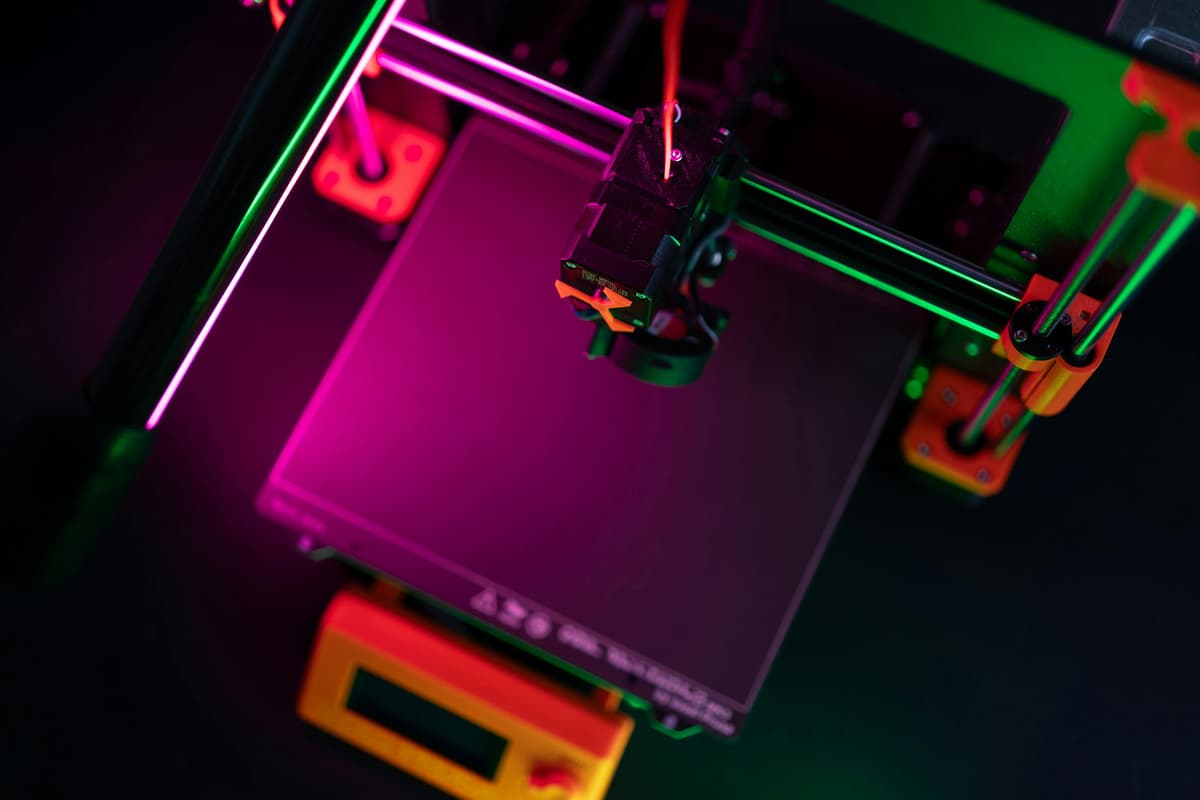
A 3D printer is what turns a file on your computer into a physical object you can hold. Setup is the bridge between unboxing and that first successful print, and how well you do it determines whether your first week feels like a breakthrough or a frustration. Here is the complete process.
What's in the Box Most printers ship partially assembled. Expect: - Pre-assembled base and gantry (or separate pieces to join) - Print head assembly - Spool holder and filament sample - Power supply and cables - Tool kit (Allen keys, screwdriver, snips) - SD card with test files and slicer software
Assembly: Kit vs Pre-Assembled Pre-assembled printers (Bambu Lab, most Prusa): 15-30 minutes to set up. Attach spool holder, plug in cables, level bed, done.
Kit printers (Ender 3 series): 1-3 hours. You'll bolt together the frame, mount the gantry, route cables, and install the print head. Watch the manufacturer's video first.
Take your time with assembly. Squared frame and tight belts matter. Rushing creates problems you'll chase for weeks.
First Power On Before printing anything: 1. Check all connections are secure 2. Verify the bed heater works 3. Verify the hotend heater works 4. Run the motors in each axis, listen for grinding 5. Check belt tension (firm but not guitar-string tight)
Bed Levelling This step determines whether your first prints succeed or fail.
Auto bed levelling (ABL): Run the auto-level sequence. It probes multiple points and compensates for bed irregularities.
Manual levelling: Heat the bed to printing temperature (60°C for PLA). Use paper between nozzle and bed at each corner. Adjust until you feel slight resistance when pulling the paper. Repeat until all corners match.
The first layer is everything. If it doesn't stick or looks wrong, fix levelling before printing anything else.
Filament: What to Start With
Every printer comes with a small filament sample. Once it runs out, you need to know what to buy.
**Start with PLA.** It prints at the lowest temperatures (185-220°C hotend, 50-60°C bed), adheres well to most bed surfaces, and doesn't require an enclosure. It comes in hundreds of colours from dozens of brands. Almost every beginner problem is easier to diagnose in PLA than any other material.
What to avoid initially: ABS warps without an enclosure and produces fumes. Nylon absorbs moisture and needs a dry box. Flexible filaments (TPU) require slower speeds and direct drive extruders. Learn PLA first, then branch out.
**Storing filament:** Moisture ruins filament. A dry roll prints smoothly; a wet roll pops, hisses, and produces rough surfaces. Store sealed in airtight bags or containers with silica gel desiccant. If a roll has been open for months, dry it in your oven at 45-50°C for 4-6 hours before printing.
Recommended brands: Bambu Lab, Prusament, eSUN, and Polymaker all produce consistent PLA. Avoid the cheapest unbranded rolls; diameter variance causes extrusion inconsistency. Expect to pay £12-18 for a 1kg spool of quality PLA.
Software Setup
You need a slicer to convert 3D models into printer instructions.
Cura: Free, works with most printers, excellent preset profiles. Best for Creality and most open-frame machines.
PrusaSlicer: Free, great for Prusa printers, works with others. More technical options visible by default.
Bambu Studio: Required for Bambu printers, excellent interface, also works with third-party printers via custom profiles.
Install your slicer, select your exact printer model (not a generic profile), and set filament type to PLA with manufacturer-recommended temperatures. Use default settings for your first ten prints. The temptation to optimise settings early is real, but it adds variables before you know how the printer behaves.
Key slicer settings to understand before your first print: - Layer height: 0.2mm is standard. Lower for detail, higher for speed. - Print speed: Start at 50-60mm/s. Increase only once you understand your printer. - Supports: Enable for overhangs beyond 45 degrees. Leave type as automatic. - Infill: 15% for decorative objects, 30-40% for functional parts.
First Print
Most printers include a test file on the SD card. Print it first. Typical options: - Calibration cube (XYZ cube): Tests dimensional accuracy - Benchy boat: Tests overhangs, bridges, and details - Simple flat object: Confirms bed adhesion and first layer
Watch your first print closely. The first few layers reveal levelling issues. Stay until you have confirmed good adhesion before walking away.
Essential Tools A few inexpensive tools make setup and printing much easier. Digital calipers let you measure print accuracy and filament diameter. A scraper set helps remove prints safely without damaging the bed. *(Prices when reviewed: calipers ~£12, scraper set ~£8 | Check Price on Amazon | Check Price on Amazon)*
Where to Find Models Thingiverse: Largest collection, variable quality Printables (Prusa): Curated, higher average quality MyMiniFactory: Good for miniatures and decorative items Thangs: Search across multiple sites
Start with simple models. Complex prints reveal printer issues, but they're harder to troubleshoot.
Preparing Models Before Slicing
Not all 3D model files are print-ready. Knowing what to check saves failed prints.
File types: STL is the standard. 3MF is better (preserves scale and slicer settings). OBJ works but is less common in printing. Download STL or 3MF files from model sites.
Checking for errors: Most slicers automatically detect and repair model errors (non-manifold geometry, holes in the mesh). PrusaSlicer and Bambu Studio both flag and fix these on import. If your slicer shows warnings about the model, accept the auto-repair before slicing.
Orientation matters: The strongest 3D prints have forces aligned perpendicular to layer lines. A bracket that will be pulled sideways should have layers running along that direction. Overhangs also depend on orientation. Rotating a model 45 degrees sometimes eliminates the need for supports entirely.
Scaling: Print the first version at 100% scale unless you have a specific reason not to. Once your first layer height and calibration are dialled in, you can reliably scale from there.
Calibration: The Step Most Beginners Skip
Assembly and bed levelling get you to a working printer. Calibration gets you to a good printer. Run these in order before printing anything complex.
1. Z-offset fine-tuning After auto-levelling, the Z-offset sets the exact gap between nozzle and bed. The goal: filament squishes slightly into the bed surface on the first layer, creating a bond without over-flattening.
Too high: filament strands separate, poor adhesion, prints pop off. Too low: nozzle drags, filament won't flow, scratches the bed.
Adjust in 0.05mm increments while a first-layer test print runs. Watch the first layer live. When lines merge together without gaps and without a raised ridge, the offset is correct.
2. E-steps calibration The extruder steps (e-steps) determine how much filament the printer feeds per unit of movement. Mark 120mm on a filament above the extruder. Command 100mm of extrusion. Measure how far the mark moved. If it moved more or less than 100mm, recalculate: new e-steps = (current e-steps x 100) / actual mm extruded.
3. Temperature tower Every filament brand and colour prints differently. A temperature tower prints the same object at decreasing temperatures, showing you where your specific filament performs best. Download one from Printables, import into your slicer, add temperature change commands at each transition height. The best-looking section reveals your optimal temperature.
4. Retraction calibration Retraction pulls filament back before travel moves to prevent oozing and stringing. Too little: strings everywhere. Too much: gaps and jams.
Print a retraction test (two thin towers with a travel move between them). Start with 0.5-1mm retraction on direct drive, 4mm on Bowden. Adjust up in 0.2mm steps until stringing stops. Don't exceed 2mm on direct drive or 7mm on Bowden.
Slicer Settings: What Actually Matters
Most slicer settings can be left at default. These four have the biggest impact on print quality and reliability.
Layer height: 0.2mm is the standard starting point. It balances quality and print speed. Lower (0.12mm) for detailed prints. Higher (0.28mm) for functional parts where speed matters more than surface finish. Never go below 25% of your nozzle diameter (0.1mm for a 0.4mm nozzle).
Print speed: Start slow. 40-60mm/s for your first prints. Once you understand your printer's behaviour, increase gradually. Fast printing exposes every calibration problem. Slow printing forgives imperfection.
Supports: Enable for overhangs steeper than about 45 degrees. Set support interface layers to 2 for easier removal. Increase support Z-distance if supports are fusing to the print surface.
Infill: 15% gyroid for decorative objects. 25-40% for functional parts. 60%+ for structural parts under load. Infill pattern matters less than percentage for most uses. Gyroid and cubic patterns distribute load better than grid in all directions.
Printer-Specific Setup Notes
The setup process shares common steps, but specific models have quirks worth knowing before you start.
Creality Ender 3 V3 SE: The CR Touch ABL and direct drive extruder make setup largely automated. Run the full automatic levelling routine before the first print. The default Z-offset stored in firmware is rarely correct; use live Z adjust during the first print and save. PEI bed grips PLA well without adhesive. Use a thin glue stick layer for PETG to aid release.
Creality Ender 3 Pro/V2 (older models): Manual bed levelling only. Use the paper test across all four corners and the centre. The springs under the bed compress over time and need regular retightening. Consider upgrading to stiffer springs (around £4-8) as an early investment.
Bambu Lab A1 Mini / X1 series: The first-run calibration sequence handles most setup automatically. Bambu Studio's default profiles are well-tuned. If the AMS (Automatic Material System) is included, ensure filament paths are clear and PTFE connectors are fully seated before loading. Start with single material to learn the machine.
Flashforge Adventurer 5M: The enclosed chamber reduces environmental calibration headaches. The quick-swap nozzle system makes nozzle changes fast. Run the auto-levelling and Z-offset calibration through the touchscreen before first use.
Prusa MK4S: Kit assembly takes 8-10 hours for a first-time builder. Take time on the wiring harness routing. Prusa's online documentation is the best in the industry. PrusaSlicer profiles are optimised specifically for this machine. Input shaper calibration runs automatically on startup.
Safety During Setup
3D printing is safe for home use, but a few precautions from the start prevent problems later.
Thermal runaway protection: Verify your printer has it enabled. All machines listed in our guides do. This safety feature cuts power to the heaters if temperature readings become erratic. Check your firmware settings to confirm it is active.
Placement: Set the printer on a flat, stable, non-flammable surface. Keep it away from paper, fabric, and anything flammable. A smoke detector in the same room is sensible regardless of what you print.
Enclosure consideration: PLA fumes are minimal at standard temperatures. ABS and ASA produce fumes that warrant ventilation or an enclosed printer with carbon filter. If you're printing ABS in a confined space, ventilate actively.
During unattended printing: The first ten to twenty prints on any new machine should be supervised until you trust how it behaves. Once you're confident in the setup, thermal runaway confirmed, bed adhesion reliable, no unusual sounds, unattended printing is fine.
When Your First Print Goes Wrong
Every 3D printer owner has a wall of failed prints. Knowing what each failure means is faster than searching forums.
Nothing sticks to the bed: Bed not level or Z-offset too high. Re-run levelling. Add a thin layer of glue stick if adhesion is still poor after levelling. For PETG, try a slightly lower Z-offset to push the first layer harder onto the bed.
Print peels up at corners (warping): Ambient temperature too low or bed temperature too low. Increase bed temperature by 5°C. Add a brim in your slicer (5-10mm). Ensure there's no draught hitting the printer during printing.
Stringing (thin hairs between parts): Retraction too low or temperature too high. Lower print temperature by 5°C first. If stringing persists, increase retraction distance by 0.2-0.5mm increments.
Layers not adhering (delamination): Print temperature too low or print speed too high for that temperature. Increase temperature by 5°C. Reduce speed by 20%.
Extruder clicking (skipping): The extruder motor is grinding filament it can't push. Temperature too low for the material or a partial clog. Increase temperature. If it persists, do a cold pull to clear the nozzle.
Rough, bubbly surface: Wet filament. The popping sounds confirm it. Dry the spool at 45°C for 4-6 hours.
Network Printing and Remote Monitoring
Printing via USB drive or SD card works fine but requires physical access to the printer for every job. Network printing solutions add convenience without affecting print quality.
OrcaSlicer with network integration: OrcaSlicer (a PrusaSlicer fork) supports direct network printing to Bambu machines and, via plugins, to Klipper-based printers. Download and queue prints directly from your computer.
Octoprint (Raspberry Pi): The standard solution for non-networked printers. A Raspberry Pi running Octoprint provides web-based print monitoring, remote control, webcam monitoring, and a plugin ecosystem. A Pi 3B+ with case and SD card runs around £40-50. *(Price when reviewed: ~£45 | Check Price on Amazon)*
Mainsail/Fluidd (Klipper): If you install Klipper firmware, Mainsail or Fluidd provide a web interface for monitoring and control. These are the standard interfaces for the Klipper ecosystem.
Common Setup Mistakes and How to Avoid Them
Skipping extrusion calibration: Out-of-calibration e-steps cause consistent over or underextrusion that affects every print. Mark 100mm on your filament, command the extruder to move 100mm, and measure what actually moved. Adjust until the measurement matches.
First layer too thin or too thick: The first layer is the foundation of every print. Get the Z offset right before committing to a long print. Five minutes calibrating the first layer saves hours of failed prints.
Not watching the first layer: Five minutes watching the first layer establishes whether the print will succeed. Catching a bad first layer early saves hours of printing time and material.
**Printing ABS before learning on PLA:** ABS requires an enclosure, higher temperatures, and more calibration. It is not a beginner material. Master PLA first.
First Prints: A Recommended Sequence
The order of your first few prints matters for building calibration confidence.
Print 1: Bed levelling test (single layer). A single-layer square covering most of the bed reveals levelling issues immediately. Takes 5 minutes to print. Fix any issues before moving on.
Print 2: 20mm calibration cube. Standard reference object for dimensional accuracy. Measurements should be within 0.2mm of 20mm on all three axes. If X and Y are correct but Z is off, adjust e-steps or flow rate. If X and Y are off, re-square your gantry.
Print 3: Benchy. The 3D printing community's standard benchmark object. Combines overhangs, bridges, fine detail, and curved surfaces. Results tell you exactly which settings need refinement.
Print 4: The thing you actually want. Once calibration is verified, print something useful. The satisfaction of a successful functional print is the best motivation to continue learning.
This sequence takes 2-3 hours and gives you a calibrated printer with reliable results for everything that follows. Once you're printing regularly, our maintenance guide covers keeping things running smoothly. Our bed levelling guide goes deeper on getting that first layer perfect.
Bed Surface Types and Adhesion
The surface your prints sit on affects adhesion, release, and what materials you can use.
PEI (polyetherimide) spring steel: The current standard. Flexible spring steel sheet with PEI coating clips to the bed magnetically. PLA and PETG release cleanly when the bed cools. Flip the sheet for slightly different surface texture. This is what most modern printers ship with.
Glass bed: Flat and easy to clean, but less forgiving on Z-offset and requires adhesive for most materials. Use a glue stick layer (Pritt Stick or similar) for PLA and PETG, reapply every 5-10 prints. Glass holds heat well, which helps with larger prints.
BuildTak and similar textured sheets: Good for materials that need help sticking, but prints can be difficult to remove. More common on older machines and specialist applications.
Adhesion aids by material: - PLA: Usually none needed on PEI. Glue stick if your model has a small footprint. - PETG: Thin glue stick layer on PEI to prevent it bonding too strongly. PETG grips PEI aggressively when hot. - ABS: High-temperature glue stick or ABS slurry (ABS dissolved in acetone). Enclosure required. - TPU: Clean PEI, no adhesive. TPU self-adheres well.
Cleaning the bed: Isopropyl alcohol (90%+) on a cloth before each print session. Oils from fingers reduce adhesion. Never touch the print surface with bare hands.
Post-Processing: Getting Prints to Their Final Form
Most prints come off the bed ready to use. Some need finishing work.
Removing supports: Needle-nose pliers grip support material and twist it away. Work from the edges inward. Interface layers (the slicer setting that puts a thin gap between support and print) make removal cleaner. Raise interface layer count to 3 in your slicer if supports are fusing to the print surface.
Sanding: Start with 150-grit for obvious layer lines. Progress through 220, 400, and 800-grit wet/dry paper. Use water with the wet/dry paper; it extends paper life and reduces dust. PLA sands well. ABS sands and can be acetone-smoothed. PETG is difficult to sand without generating heat.
Painting: Prime first. Rattle-can filler primer from any hardware store fills layer lines and gives paint something to grip. Let it cure 24 hours. Sand with 400-grit. Apply colour in thin coats. Acrylic model paints work well for detail work.
Thread inserts: Heat-set threaded inserts let you create strong screw points in printed parts. A soldering iron pushes them into printed holes flush. Much stronger than screwing directly into printed plastic.
Understanding Print Quality Trade-offs
There is no universal "best" quality setting. Every decision involves a trade-off.
Layer height vs speed vs strength: Lower layer height means more layers, more detail, and longer print times. Higher layer height means faster prints and slightly stronger parts (fewer layer boundaries to fail at). For display objects where surface quality matters, 0.15-0.2mm. For functional parts where speed and strength matter, 0.25-0.3mm.
Infill pattern vs density: Gyroid infill distributes force in three dimensions and is the right choice when you don't know the stress direction. Grid is fine for simple stacking loads. For maximum strength along a known axis, honeycomb aligned to that axis outperforms gyroid. But for most hobby printing, 20-25% gyroid handles almost anything.
Perimeters vs infill for part strength: Most of a print's strength comes from its outer walls (perimeters), not infill. A part with 4 perimeters and 15% infill is stronger than one with 2 perimeters and 40% infill. Increase perimeter count before increasing infill density for stronger functional parts.
Print temperature vs speed: Higher temperatures allow faster printing but increase stringing risk. Lower temperatures reduce stringing but require slower speeds for layers to bond. Find your filament's sweet spot with a temperature tower before printing anything complex.
This sequence takes 2-3 hours and gives you a calibrated printer with reliable results for everything that follows. Once you're printing regularly, our maintenance guide covers keeping things running smoothly. Our bed levelling guide goes deeper on getting that first layer perfect.
As an Amazon Associate, we earn from qualifying purchases.